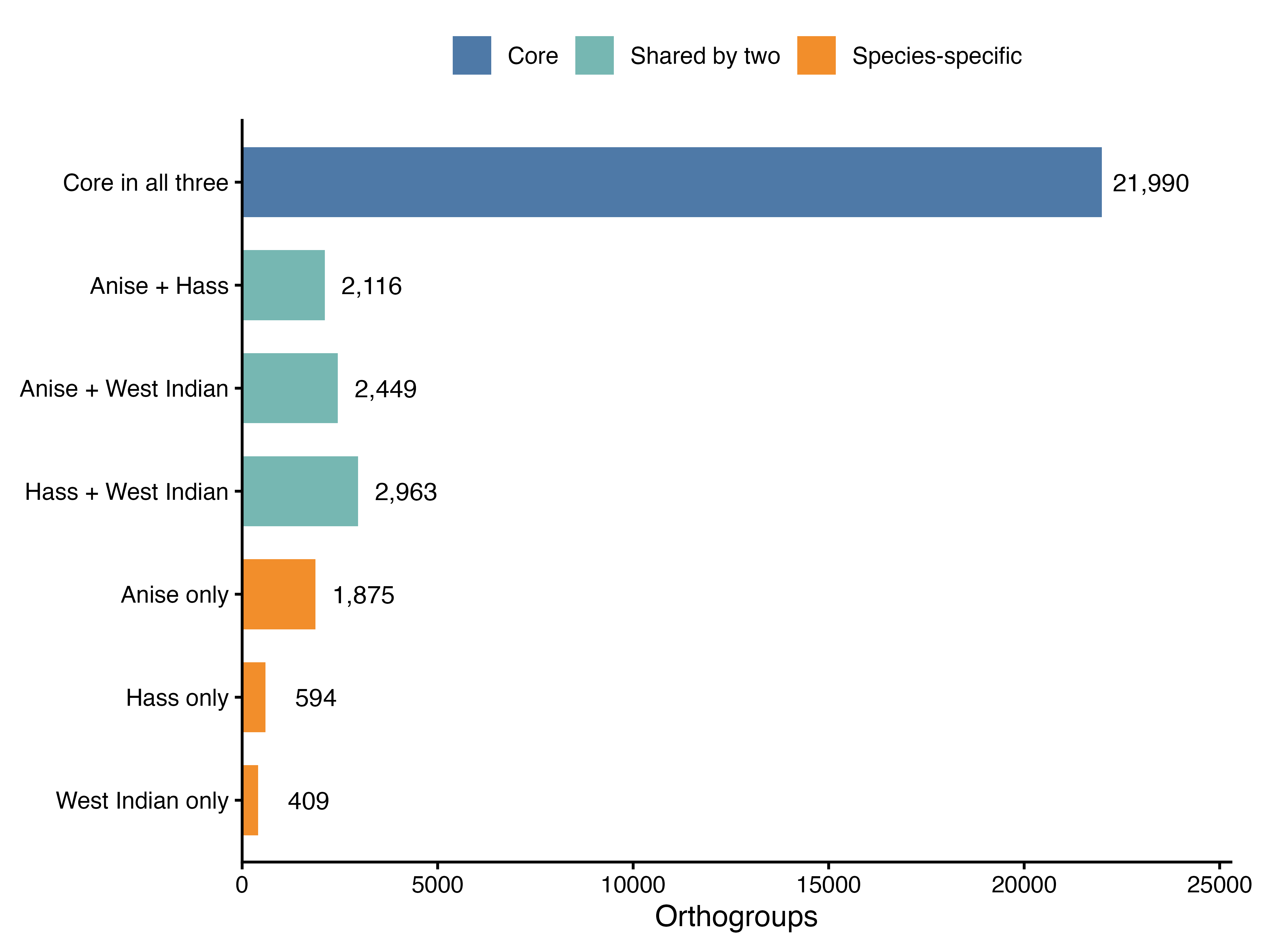
Orthogroup intersections
Mutually exclusive core, pairwise-shared, and genome-specific orthogroup categories across Anise, Hass, and West Indian.
Avocado and Lauraceae evolution
Explore gene-family evolution, chromosome-scale synteny, structural variation, focused chromosome 12 evidence, and a model of ancestral Lauraceae chromosomes.
Figures summarize the supplied comparative-genomics analyses. Structural rearrangements and ancestral chromosome arrangements are inference-based candidates, not validated molecular breakpoints. Open any figure for the full-resolution version or download its accompanying evidence.
01 · Evolutionary framework
Mutually exclusive core, pairwise-shared, and genome-specific orthogroup categories across Anise, Hass, and West Indian.
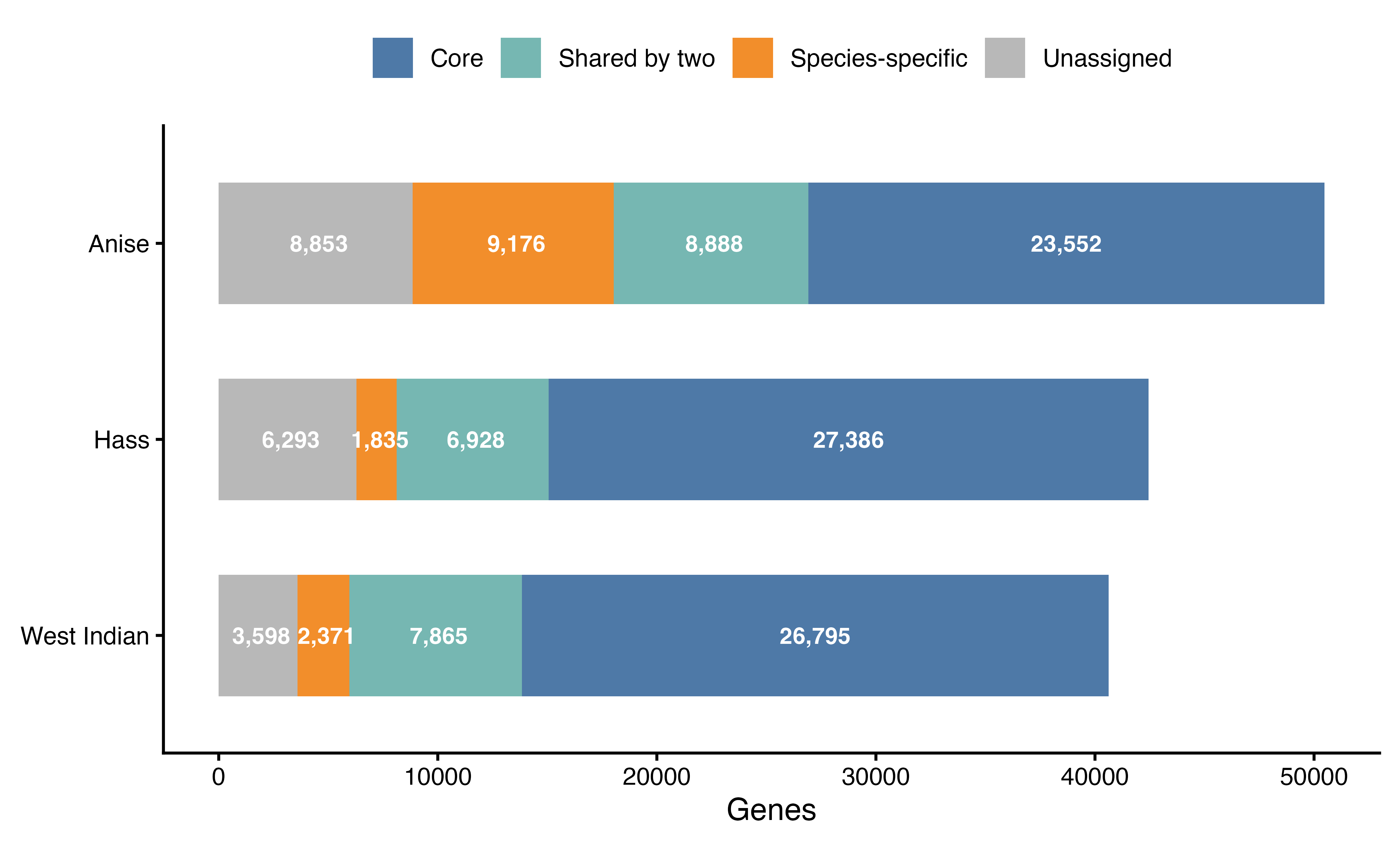
Genes assigned to core, pairwise-shared, genome-specific orthogroups, or the unassigned category for each avocado genome.
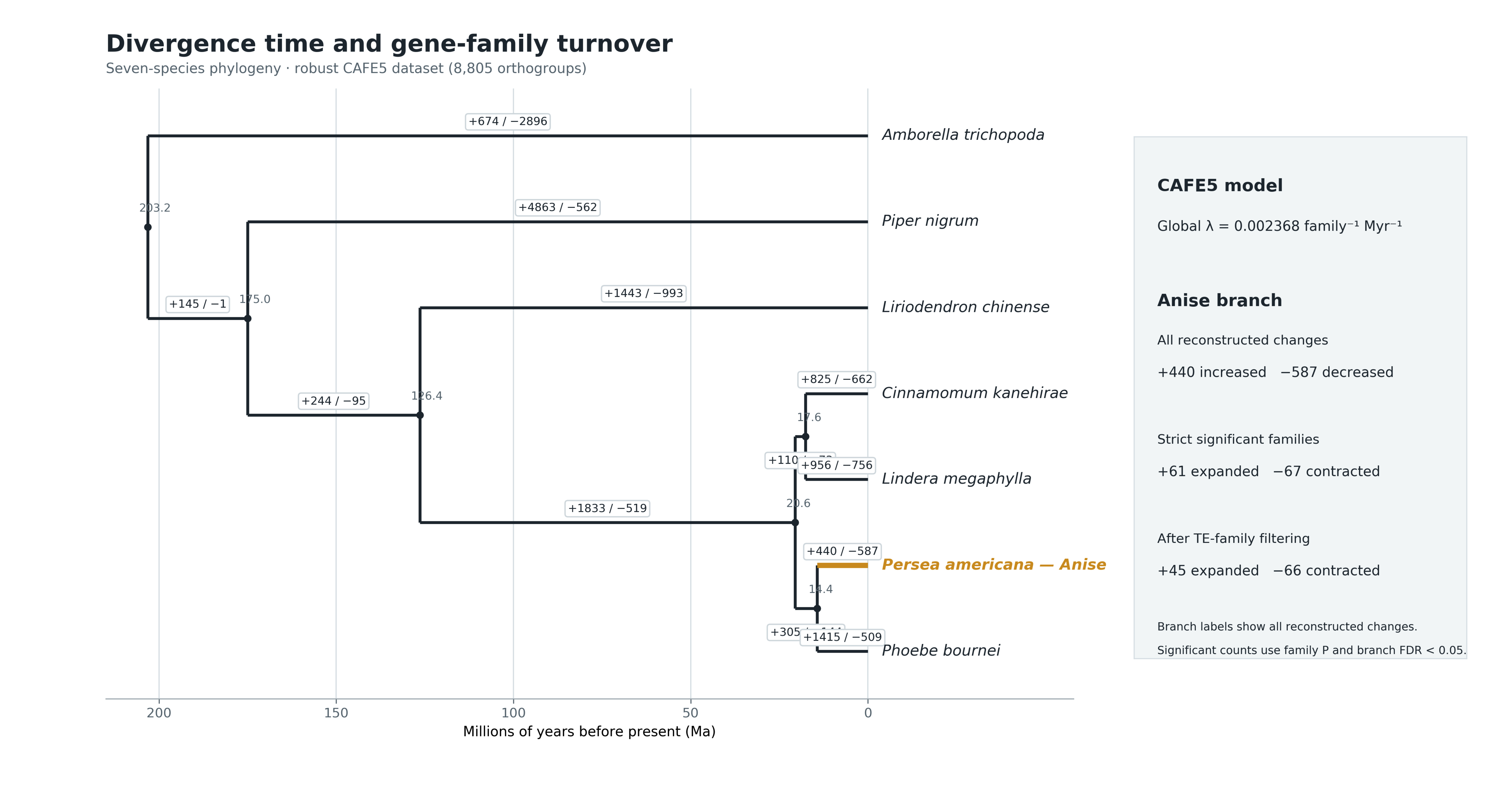
Seven-species divergence-time framework and CAFE5 family expansion/contraction results, including the Anise branch.
02 · Chromosome-scale comparison
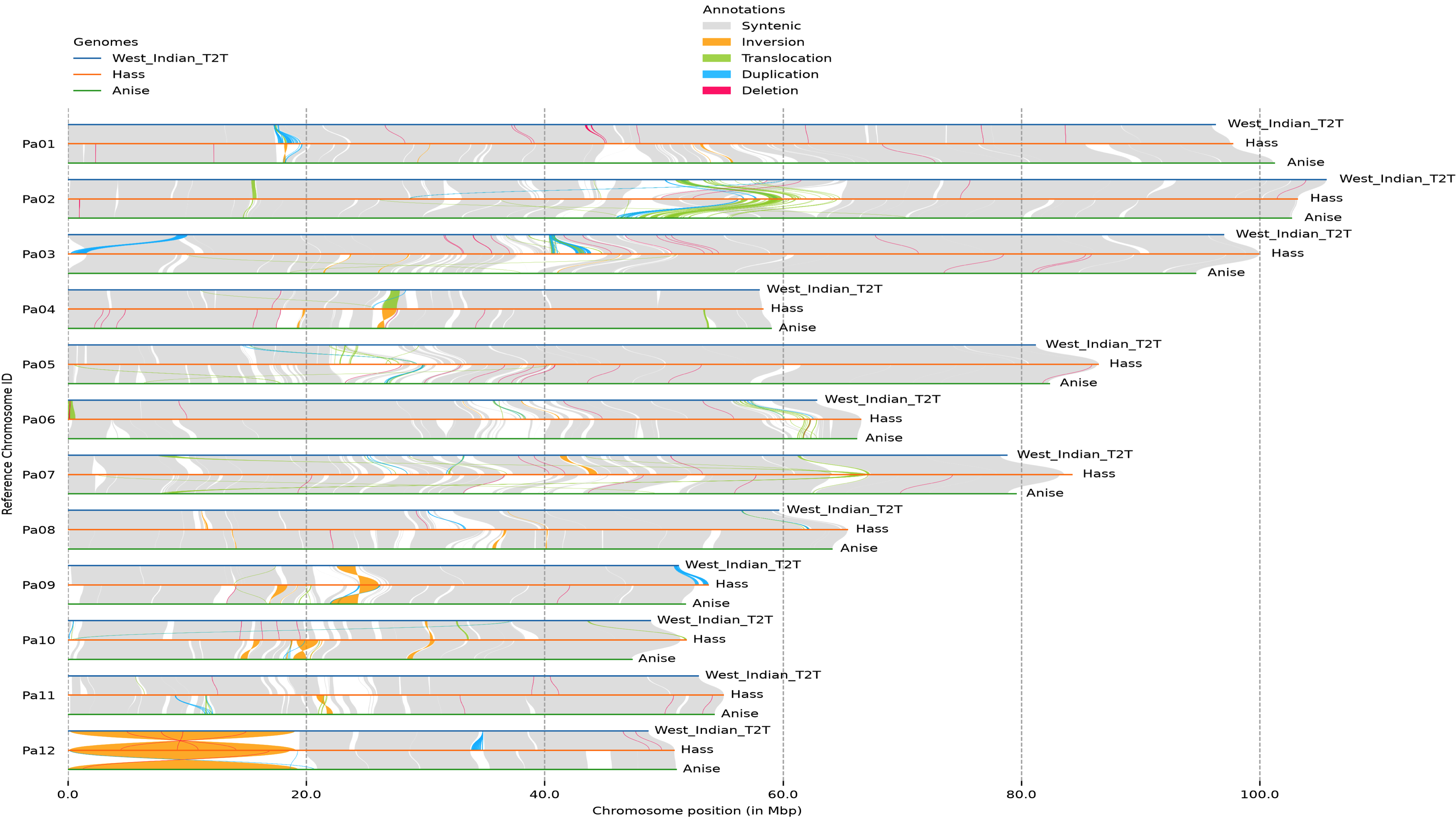
Chromosome-scale relationships among West Indian T2T, Hass, and Anise. Colours distinguish syntenic, inverted, translocated, duplicated, and deleted segments.
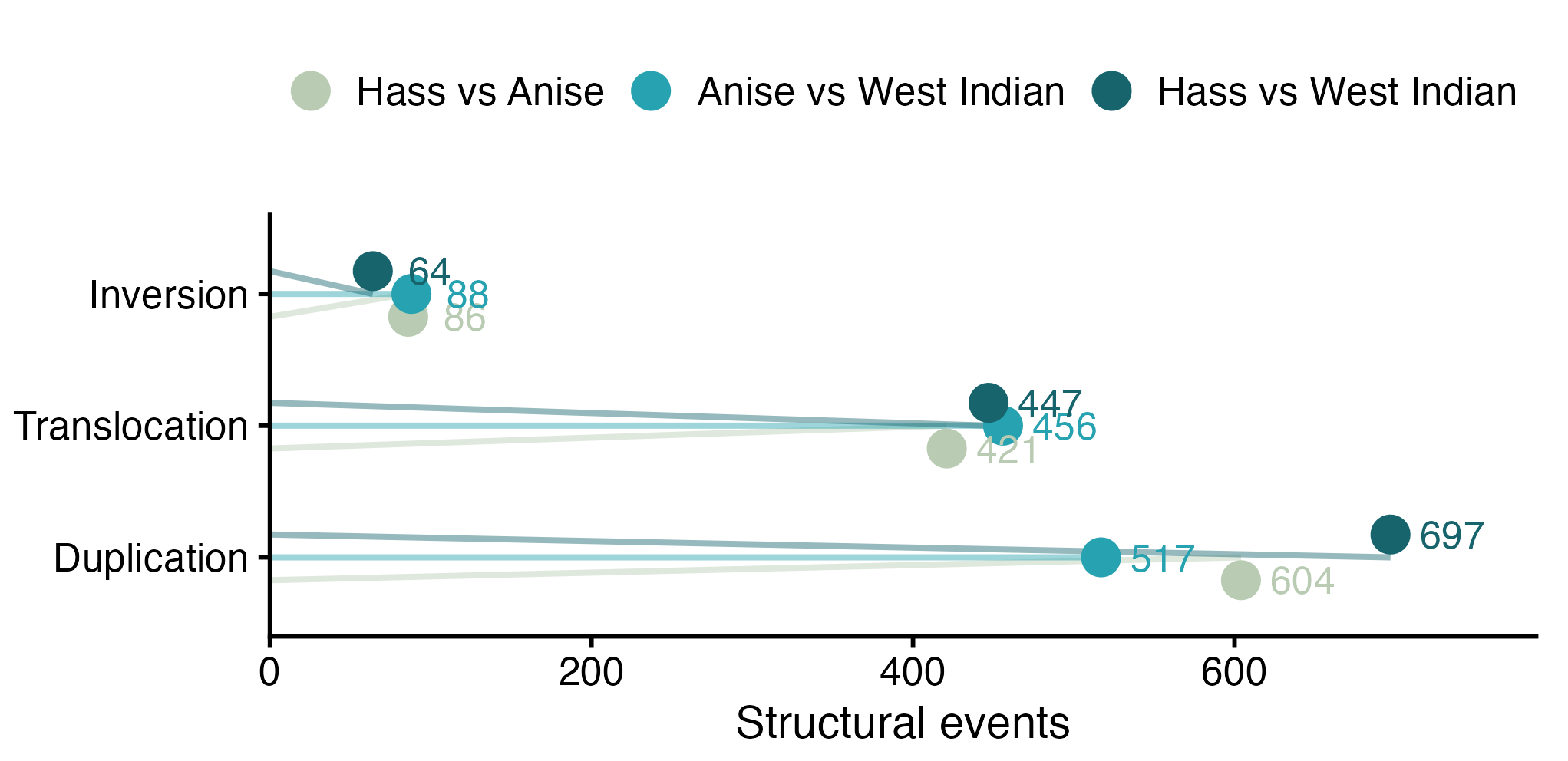
Pairwise counts of inversion, translocation, and combined reference/query duplication events.
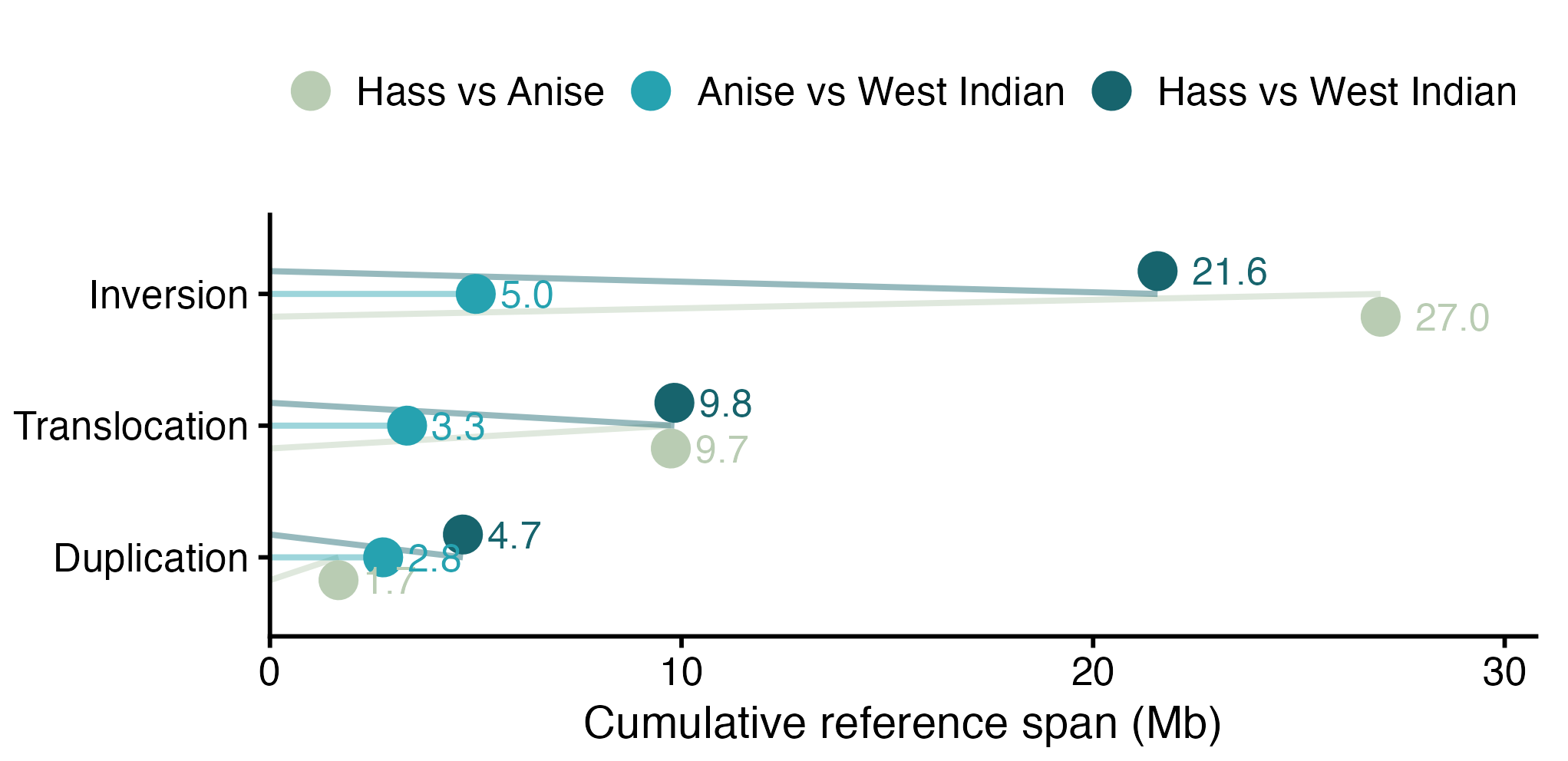
Cumulative reference-genome span associated with inversion, translocation, and reference-duplication calls.
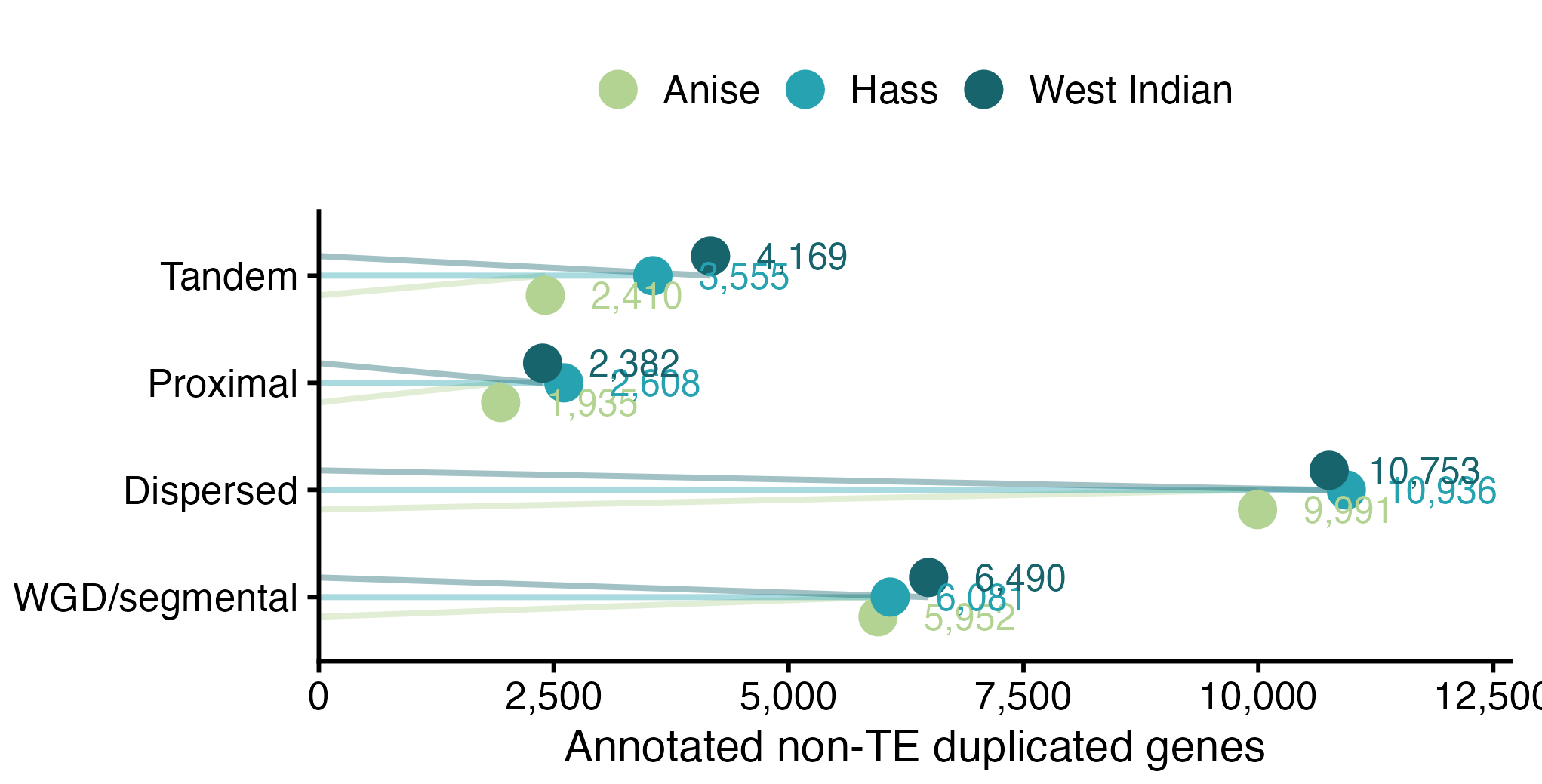
Annotated non-TE duplicated genes classified as tandem, proximal, dispersed, or high-confidence WGD/segmental duplication.
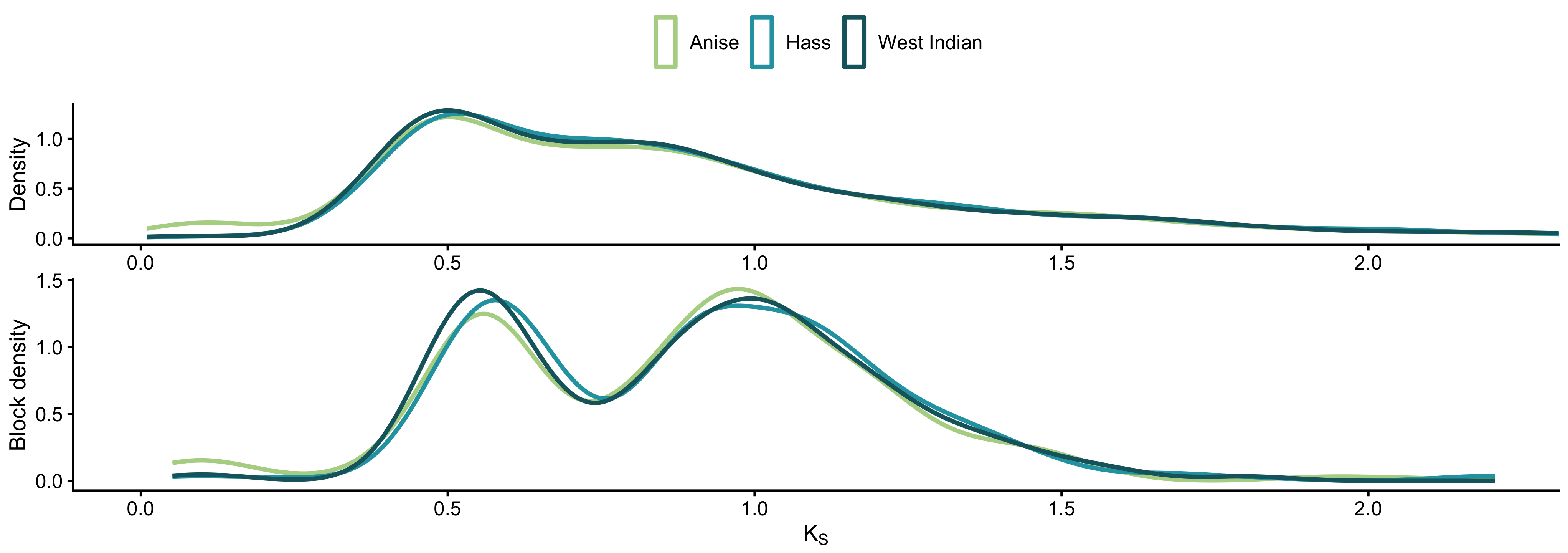
Pair-level and block-median Ks density profiles for strict non-TE interchromosomal syntenic anchors.
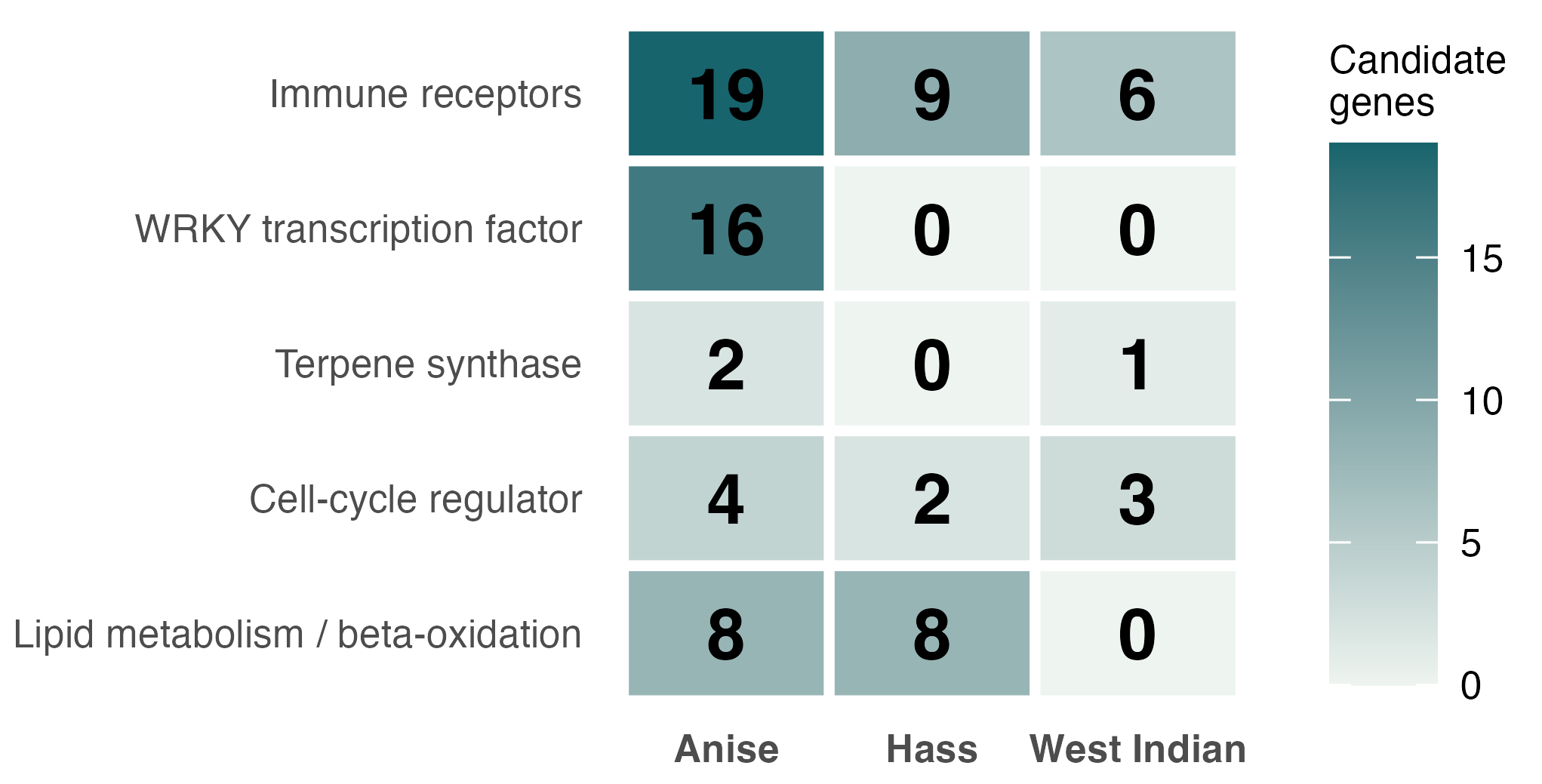
Selected immune, WRKY, terpene, cell-cycle, and lipid-metabolism family counts across the three genomes.
03 · Focused evidence
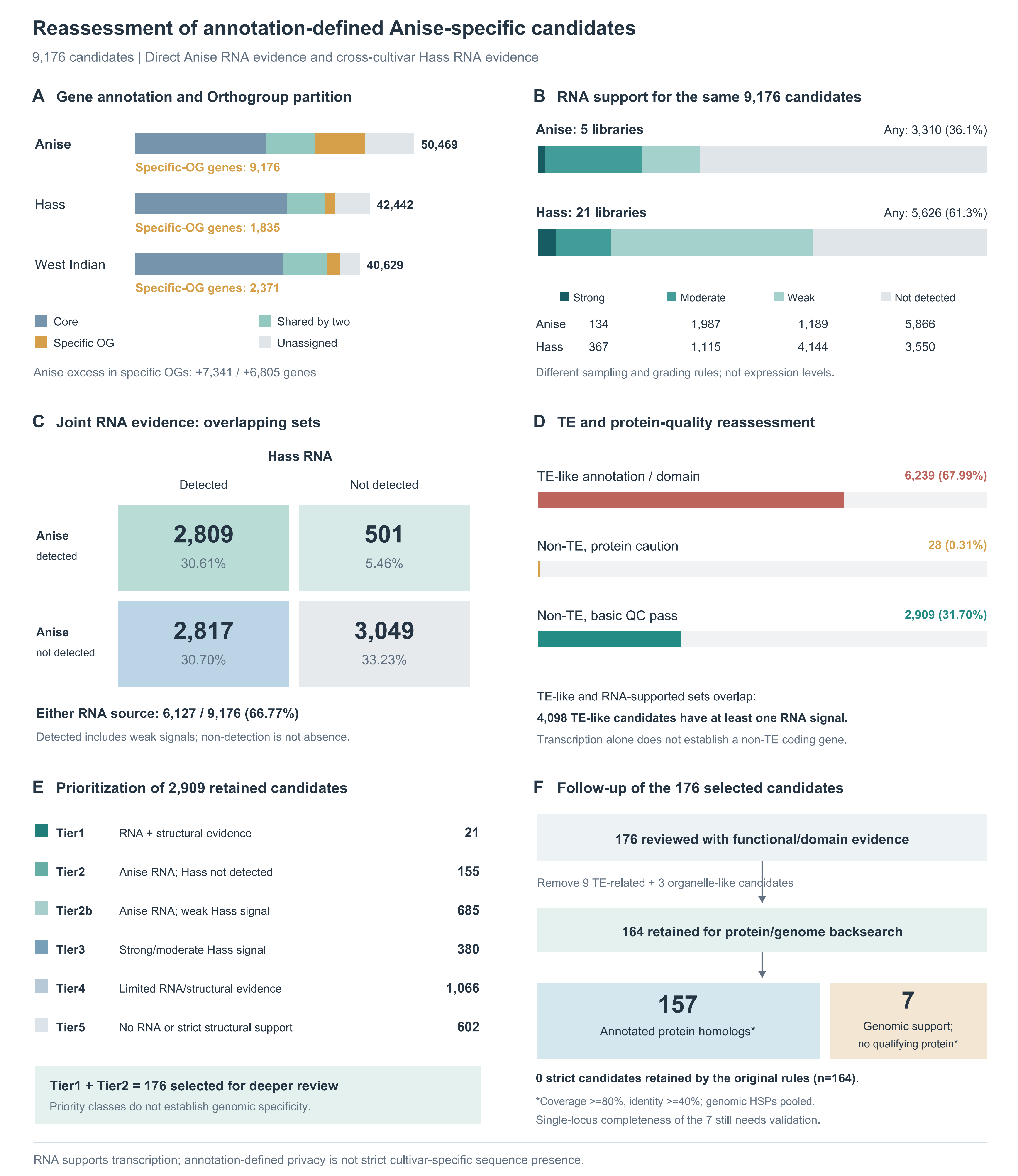
RNA evidence, TE/protein-quality filtering, prioritization, and homology back-search re-evaluate 9,176 annotation-defined candidates without treating them all as proven novel genes.
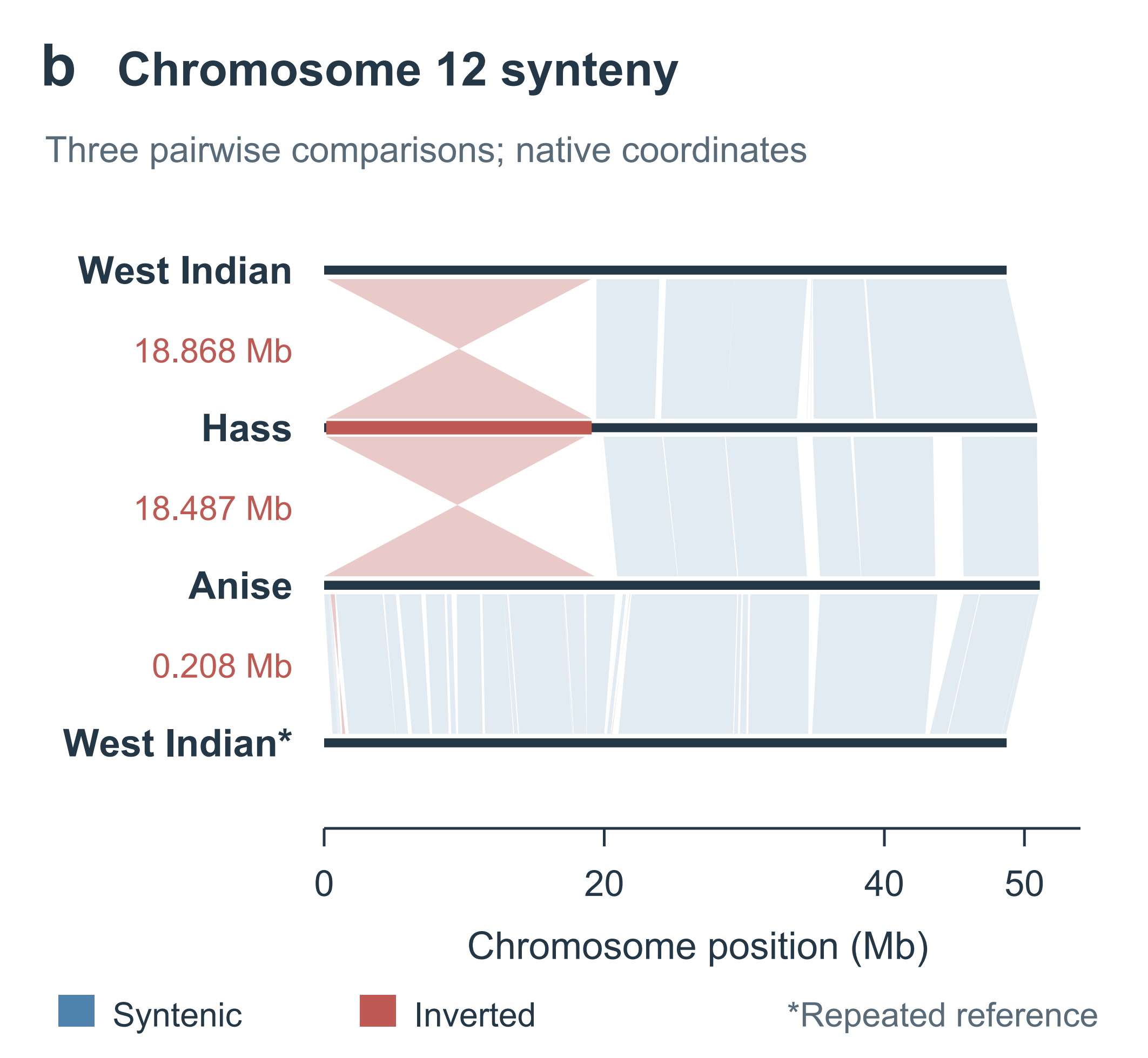
Three pairwise chr12 comparisons highlight large orientation differences involving Hass and a smaller local Anise–West Indian inversion candidate; boundaries are not validated breakpoints.
04 · Ancestral Genome Reconstruction (AGR)
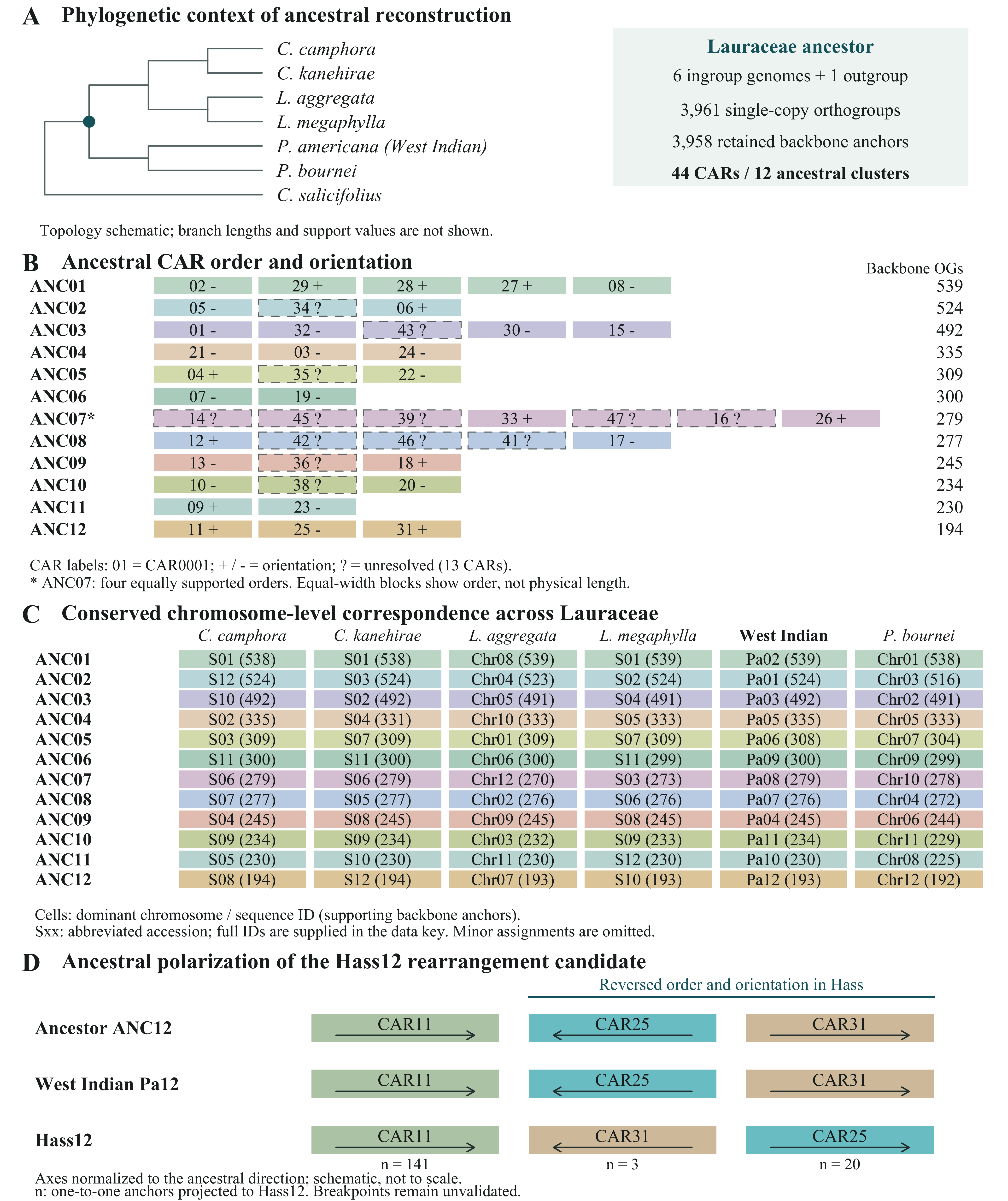
Four-panel synthesis of phylogenetic context, ancestral CAR order and orientation, chromosome-level correspondence, and ancestral polarization of the Hass chromosome 12 rearrangement candidate.
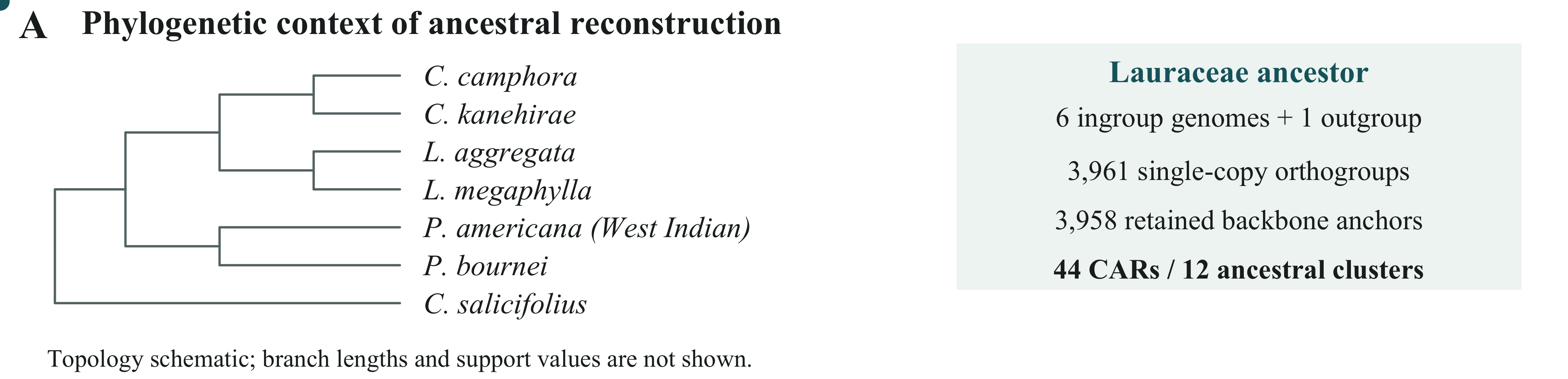
Six ingroup genomes and one outgroup define the topology; branch lengths and support values are intentionally not shown.
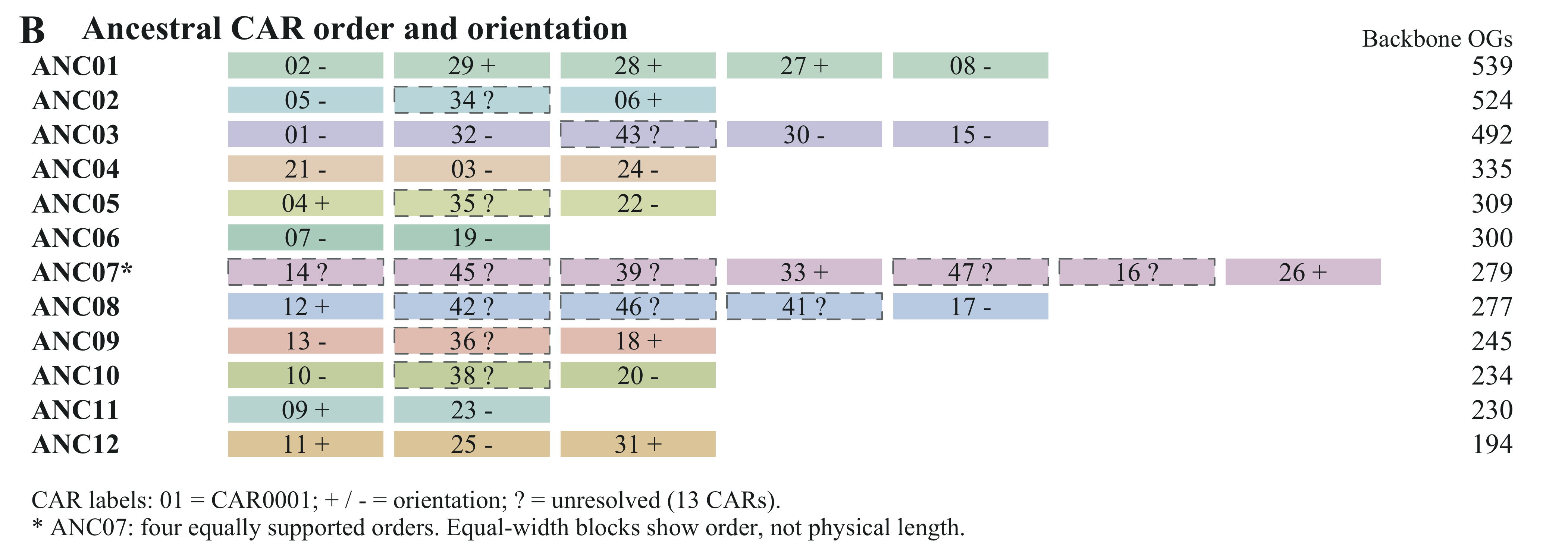
Predicted order and orientation of 44 CARs across 12 ancestral clusters; unresolved orientations and provisional ANC07 ordering remain marked.
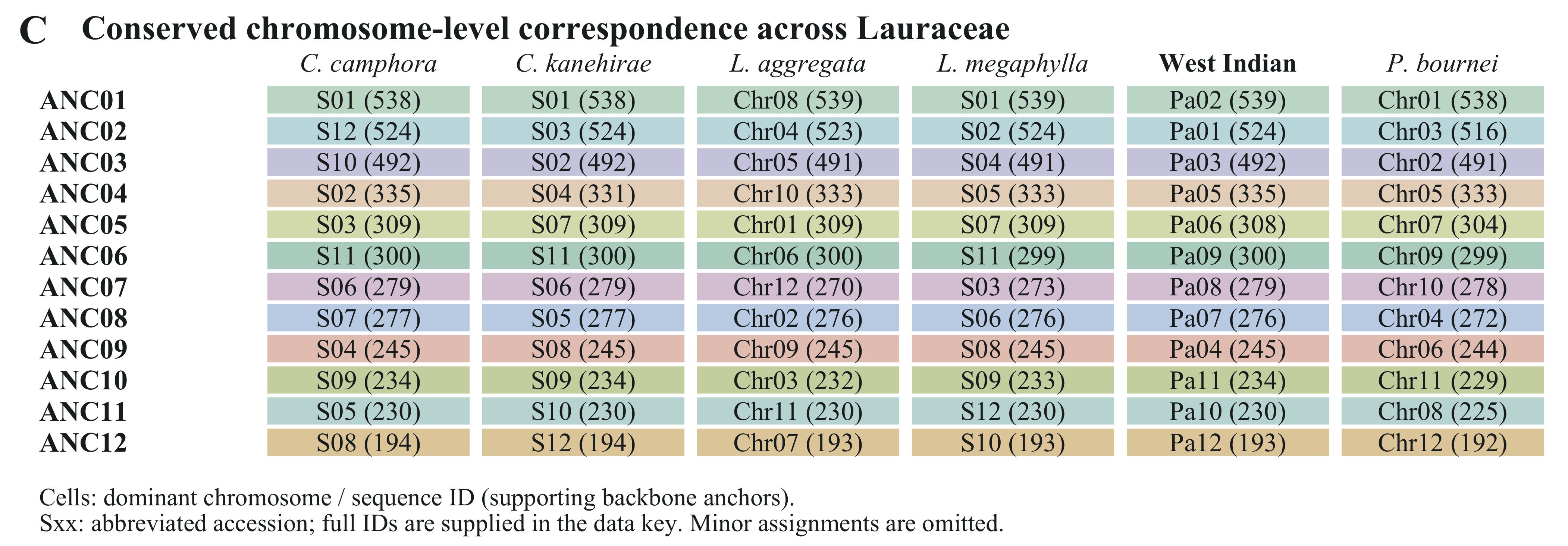
Dominant chromosome or sequence correspondence for each ancestral cluster across six Lauraceae ingroup species.
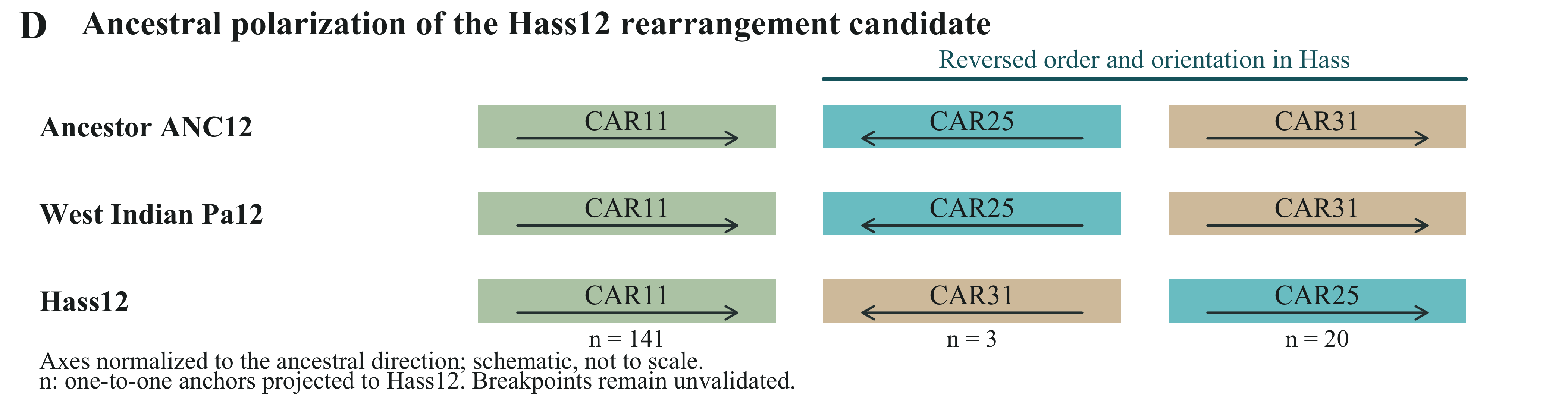
West Indian Pa12 follows the inferred ANC12 arrangement after axis normalization, while Hass12 shows reversed CAR0025/CAR0031 order and orientation; this is not breakpoint validation.
05 · Evidence downloads